By Your Partners DC | Your Washington, DC–Area Real Estate Experts
A winter walk from Eastern Market to the U.S. Botanic Garden is an easy way to see two sides of Capitol Hill in one outing: residential streets and a working neighborhood market at the start, then the Capitol grounds and a seasonal garden exhibit at the finish. In 2026, the Garden’s Season’s Greenings: National Parks and Historic Places runs from November 26 through January 3, 2027. You can still go after Christmas—just not on December 25, when the Conservatory and holiday train display are closed. The admission-free visit works well as the destination for a walk, provided you check the Garden’s hours and the weather before setting out.
Where should you start a Capitol Hill winter walk?
Start near Eastern Market at 225 Seventh Street SE. If the market is open when you arrive, its indoor food vendors make a useful first stop before the walk; its outdoor market operates on a different schedule, so don’t count on finding the same stalls on a weekday. Check the market’s posted hours and any holiday updates if shopping is part of your plan. Otherwise, use the market building as a landmark and spend a few minutes looking along Seventh Street before heading west.
The route is also a chance to pay attention to the residential blocks just beyond the market. On C Street SE, the storefront activity gives way to rowhouses, front steps, and a more domestic scale as you approach the Capitol. That change is useful to notice if you are considering living here: a listing may say “near Eastern Market,” but a walk shows you how a particular block relates to the market, the Metro, and the streets you would use regularly. Take note of where the commercial activity ends rather than assuming every nearby address has the same feel.
How do you walk from Eastern Market to the Botanic Garden?
From Seventh Street SE, head west on C Street SE toward First Street SE. Turn left on First Street SE, continue south to Independence Avenue, and then head west along the southern edge of the U.S. Capitol grounds. Once you reach First Street SW, continue toward the U.S. Botanic Garden. For the Conservatory, turn north and use its entrance on Maryland Avenue SW; the gated outdoor gardens also have an entrance from Independence Avenue. This is a walking outline, not a substitute for checking crossings and any temporary restrictions you encounter.
Give yourself time rather than treating the walk as a race to the exhibit. The blocks west of Eastern Market let you see the change from the neighborhood’s small-scale residential streets to the larger Capitol complex; along Independence Avenue, the Capitol is immediately to your north. The Capitol Visitor Center confirms that the grounds are open to visitors, but an unplanned closure or a cold, wet afternoon can still change how you want to approach the Garden. Comfortable shoes matter here as much as a plan for getting home.
You do not have to walk both ways. The Garden recommends Federal Center SW for Metrorail access, and Capitol South is another station near the eastern side of the Capitol. That gives you the option to start near Eastern Market, enjoy the residential streets on the way out, and take Metro after the exhibit. If you are driving instead, know that the Garden has no visitor parking lot; finding a street space should not be the assumption around which you build the outing.
What is inside the Conservatory, and where are the model trains?
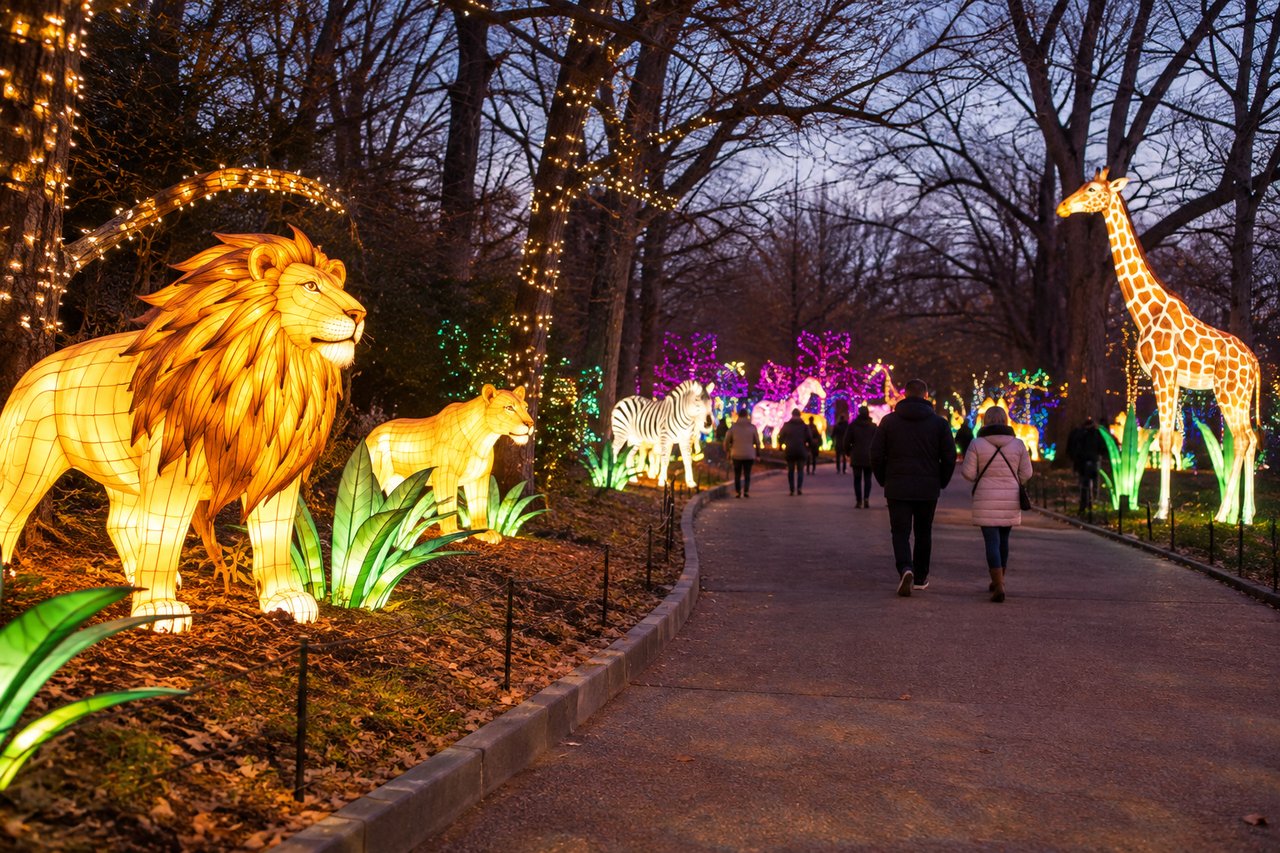
The distinction matters when you plan your visit: the 2026 model trains are outdoors, in the gated gardens beside the Conservatory. They travel through plant-made representations of national parks and historic places, including scenes associated with the Grand Canyon and Yellowstone. This year’s theme is not a miniature version of the Capitol Hill streets you just walked. It takes the outing from a very local route into a display of landscapes and sites from across the country. The Garden’s exhibit guide identifies the train display as weather-dependent, so a ticket-free visit does not guarantee that the trains will be running when you arrive.
Inside the Conservatory, look instead for poinsettias, holiday decorations, and plant-made models of Washington landmarks. The U.S. Capitol is among the D.C. landmarks featured there—an appealing comparison after seeing the building outside at full scale. The Conservatory also has its year-round living plant collections, so the indoor portion is worth allowing time for even if the outdoor trains pause because of inclement weather. Rather than promising someone “the train room,” describe the two parts accurately: D.C. landmarks and holiday plants indoors; the national-parks-and-historic-places train scene outdoors.
The outdoor setting calls for a little more care underfoot than an indoor exhibit. The Garden notes changes in surface materials, including stone, gravel, and grass, in its outdoor gardens. If someone in your group needs a step-free route, consult the Garden’s accessibility information before visiting and ask staff about the best route on arrival. A slower pace is also a good way to take in the plant details of the models rather than passing quickly from one train loop to the next.
What are the 2026 holiday hours, including after Christmas?
The published 2026 schedule lists both the Conservatory and outdoor train display as open from 10 a.m. to 5 p.m. daily from November 26, 2026, through January 3, 2027, except December 25. Admission is free, and no tickets are required. If your December calendar is crowded, the days from December 26 through January 3 offer another opportunity to see the exhibit. Before leaving home, recheck the exhibit page for any change to holiday hours or outdoor train operations, particularly if the weather looks unsettled.
For an evening walk, the Garden has announced extended hours until 8 p.m. on December 8, 10, 15, 17, 22, and 29, with live music scheduled from 5 to 8 p.m. on those dates. They are specific evenings, not a daily after-dark schedule. If seeing the trains is your priority, check their status that day; if you would rather have a quieter visit, the Garden advises that holidays and the weekends around them tend to be busiest and suggests visiting during the week when possible. Either way, leave enough time to see both the outdoor display and the Conservatory before closing.
What does this outing tell you about living on Capitol Hill?
A seasonal exhibit is a reason to make the walk, but the route tells you something more lasting about the neighborhood. Near Eastern Market, daily errands can center on Seventh Street and the surrounding blocks; farther west, the Capitol grounds become part of the route toward the National Mall. The D.C. Office of Planning’s Ward 6 heritage guide describes how Capitol Hill’s broad avenues differ from its narrower grid streets and intimate alleys. On this walk, you can notice those shifts for yourself and decide which surroundings appeal to you on an ordinary day, not just during a holiday outing.
For a prospective buyer, it is worth retracing part of the route at another time as well. Stand on the block of a home you are considering, then walk toward the market and toward the Capitol separately: which direction would you actually use for groceries, transit, or an evening out? Look at the home’s entrance, storage, and outdoor space, but also at how it connects to those everyday destinations. A seasonal walk cannot answer every property question, yet it can make the relationship between a house and its surroundings much more concrete than a map pin can.
The architecture deserves the same close attention. Many Capitol Hill blocks are within a designated historic district, but a buyer should check a particular address rather than assume every nearby property has identical requirements. D.C.’s Historic Preservation Office explains that permitted exterior work affecting a historic property can require preservation review. If a rowhouse’s windows, steps, or rear addition are important to your plans, raise those questions before treating an alteration as straightforward. The streetscape you enjoy on the walk and the obligations of owning a particular home are related, but they are not interchangeable.
Make the walk your own
For a straightforward visit, check the market schedule, walk west from Seventh Street, and leave room to explore both parts of Season’s Greenings. Choose a daytime visit if the trains are central to your plans, or one of the Garden’s announced late openings if you want to see the displays after dusk. In either case, confirm the current exhibit information before you go. The best part of beginning near Eastern Market is that the journey feels like a neighborhood walk, not merely transportation to an attraction.
If that walk has you thinking more seriously about a move to Capitol Hill, connect with Your Partners DC. We can help you compare the residential blocks near Eastern Market with other parts of the Hill, and look closely at the homes and practical details behind the streets you have just explored.