By Your Partners DC | Washington DC’s Top Real Estate Team
Fall in Washington, DC is one of our favorite times of year. The humidity finally breaks, Rock Creek Park starts changing color, and neighborhoods like Cleveland Park, Forest Hills, Georgetown, and Capitol Hill become especially beautiful as the leaves turn.
For homeowners, though, those changing leaves are also a reminder that winter isn't far behind.
DC homes deal with a particular combination of conditions: mature trees, heavy seasonal leaf fall, older housing stock, basements and lower levels, historic masonry, and winter temperatures that can dip well below freezing. A little preventative maintenance in September, October, and November can help you catch small problems before cold weather turns them into much more expensive ones.
Here's our fall home maintenance checklist for Washington, DC homeowners, along with a few things we pay particular attention to in local homes.
1. Clean Your Gutters and Downspouts
If you only tackle a few exterior projects this fall, put this one near the top of the list.
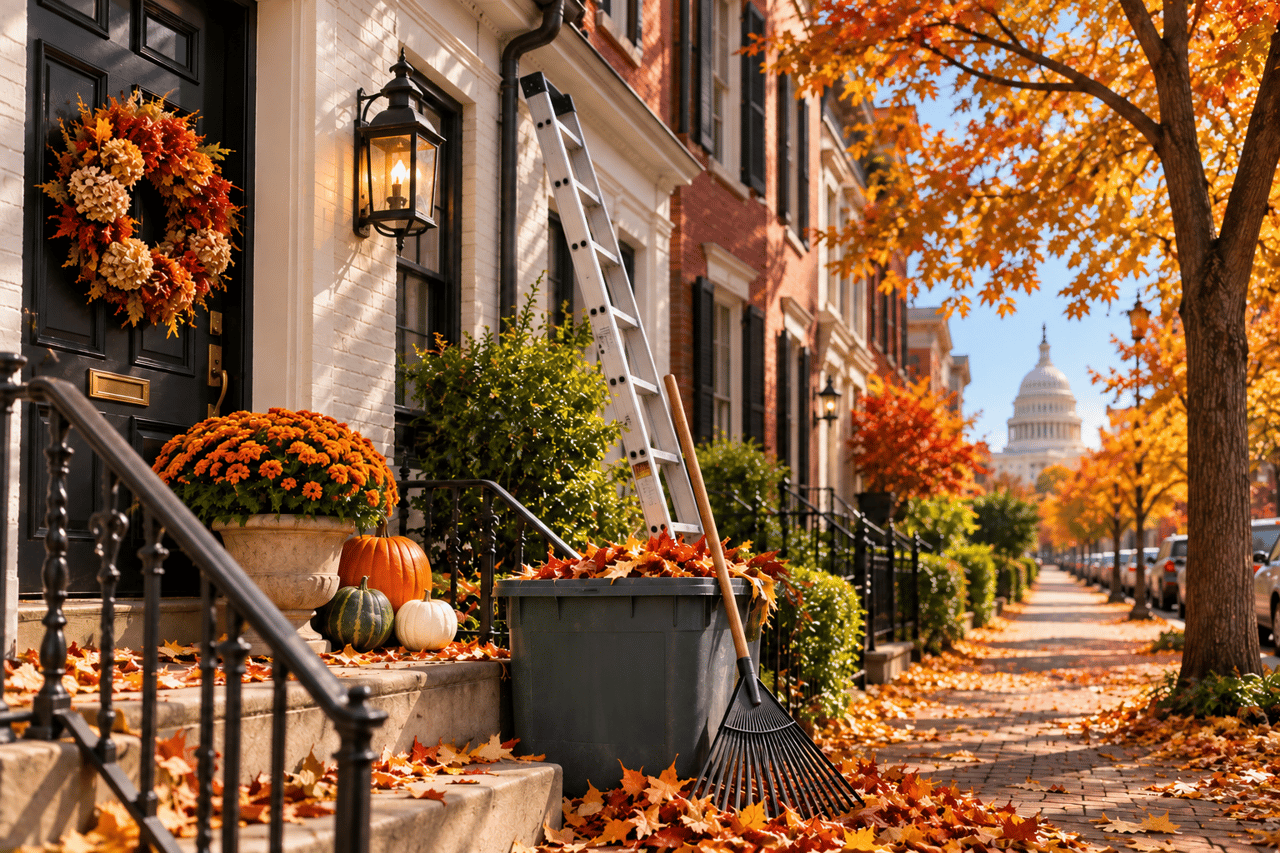
DC's tree canopy is part of what makes neighborhoods like Cleveland Park, Forest Hills, Georgetown, and Capitol Hill so appealing, but those beautiful mature trees can fill gutters quickly once leaves begin dropping. When gutters and downspouts become clogged, rainwater can overflow rather than being directed safely away from the house.
DC's Department of Energy & Environment specifically recommends keeping gutters and downspouts clear of leaves and debris because clogged drainage can send water down the side of a home and allow it to collect near the foundation.
Depending on the trees around your property, one early-fall cleaning may not be enough. If your house sits beneath mature trees, check the gutters again after the majority of leaves have fallen.
And while you're there, make sure downspouts are actually directing water away from the foundation, rather than simply dumping it beside the house.
2. Inspect the Roof Before Winter
Fall is also a good time to look for roof issues while the weather is still comfortable enough to address them.
Look for loose or missing shingles, damaged flashing, deterioration around roof penetrations, and any other areas where water could potentially enter. The DC Department of Energy & Environment includes roof inspections among its recommended home-maintenance tasks and suggests considering a professional roofer if you're not comfortable inspecting it yourself.
For DC homeowners, the type of roof matters.
Many historic rowhomes have flat or low-slope roof systems that behave differently from the pitched roofs common on detached homes. Drainage points, seams, flashing, and roof membranes deserve particular attention because standing water or a compromised area may eventually show up as an interior leak.
If you already have a suspicious ceiling stain, don't wait for winter to investigate it.
3. Disconnect Garden Hoses and Winterize Outdoor Faucets
This is an easy task to forget until the first serious freeze appears in the forecast.
DC Water recommends removing and draining garden hoses before cold weather. Homeowners should also close the interior valves controlling outdoor hose connections where applicable and drain the exterior lines.
The reason is simple: water left inside a pipe can freeze, expand, and potentially cause the pipe to break.
If you have an older DC home, pay particular attention to plumbing running through exterior walls, basements, crawl spaces, garages, or other areas that aren't consistently heated. These are among the areas DC Water identifies as particularly vulnerable during freezing weather.
A hose that takes two minutes to disconnect in October can prevent a much bigger plumbing problem in January.
4. Find Your Main Water Shutoff Before You Need It
Every homeowner should know where this is, but you'd be surprised how many people don't.
Locate your home's main water shutoff and make sure everyone in the household who may need it knows where it is. If a pipe ever bursts, being able to stop the water quickly can make a significant difference in the amount of damage.
This is especially useful in older Washington homes where plumbing may have been modified multiple times over the decades.
Don't wait until water is coming through a ceiling to start searching for the valve.
5. Check Exposed Pipes and Unheated Areas
Once you've dealt with outdoor faucets, take a quick look at the plumbing inside your home.
DC Water advises homeowners to pay particular attention to pipes exposed to outdoor temperatures or located in unheated areas such as basements, garages, attics, crawl spaces, and cabinets. Pipes that aren't insulated may benefit from appropriate pipe insulation before winter arrives.
This is especially relevant in older rowhomes where additions, renovations, and decades of plumbing work can create unusual pipe locations.
If you aren't sure which pipes are vulnerable, a plumber can help identify problem areas before freezing weather exposes them for you.
6. Have Your Heating System Checked
The first truly cold night of the year is not when you want to discover that your heat isn't working properly.
Turn your system on before you actually need it and listen for unusual noises, check that warm air is reaching the rooms it should, and replace or clean filters according to your system's requirements. If your HVAC system is due for professional maintenance, fall is a sensible time to schedule it.
DC homes can have a wide range of heating systems depending on the property's age and renovations. You may encounter forced-air systems, boilers and radiators, heat pumps, or combinations created through years of updates.
Whatever you have, understand how it works before winter.
DC Water also recommends maintaining indoor temperatures above 55°F when leaving a property for an extended period during cold weather to help protect plumbing from freezing.
7. Look for Drafts Around Windows and Doors
Historic windows and doors add enormous character to Washington homes, but they can also be a source of drafts.
On a cooler day, walk through the house and pay attention to areas around exterior doors and windows. Worn weatherstripping, gaps, or deteriorated caulk can allow cold air in and make rooms less comfortable.
In historic districts, don't assume replacing original windows is automatically the best—or simplest—solution. Depending on the property and proposed exterior work, historic-preservation considerations may apply.
Sometimes relatively simple maintenance, weatherstripping, storm windows, or repairs can improve comfort while preserving the architectural details that make the home special.
8. Pay Attention to Your Basement
If you own a DC rowhome with a basement or lower level, fall is a good time to give it a proper inspection.
Look around foundation walls, window wells, utility penetrations, mechanical areas, and anywhere you've previously noticed moisture. Check for staining, musty odors, peeling paint, efflorescence, or evidence that water has entered after heavy rain.
Then go outside and look at what's happening directly above that area.
Is a downspout dumping water near the foundation? Is a window well filling with leaves? Is the soil sloping toward the house? Is an exterior drain blocked?
Water problems are often easier to understand when you look at the inside and outside together.
9. Clear Leaves From Exterior Drains and Window Wells
Gutters aren't the only drainage points that leaves can clog.
DC rowhomes and other urban properties may have areaway drains, basement stairwell drains, window wells, patios, roof drains, or small exterior drainage systems. A handful of wet leaves in exactly the wrong place can prevent water from draining properly during a heavy storm.
Make a habit of checking these areas throughout fall rather than waiting until all the leaves are down.
This is particularly important for below-grade entrances and finished lower levels. Water needs somewhere to go, and keeping that path clear is much easier than dealing with water inside the house.
10. Inspect Brick, Mortar, and Exterior Masonry
Washington's historic brick homes are beautiful, but masonry needs maintenance too.
Walk around the exterior and look for visibly deteriorating mortar joints, loose bricks, cracking, or areas where previous repairs appear to be failing. Pay particular attention around windows, doors, parapets, chimneys, and other areas exposed to water.
Fall is useful for spotting these problems because you can address them before repeated winter freeze-thaw cycles put additional stress on already deteriorated materials.
With historic masonry, however, the right repair method matters. Older brick can be softer than modern masonry, and using an inappropriate mortar or repair technique can cause additional damage. If you're dealing with a historic home, look for a contractor experienced with older DC properties rather than assuming every masonry repair is the same.
11. Check Trees and Branches Around the House
Mature trees are one of the best features of many Northwest DC neighborhoods, but fall is a good time to look up.
Check for dead, damaged, or suspicious branches hanging over the roof, driveway, deck, or neighboring property. Fall and winter storms can bring wind, rain, ice, and occasionally heavy snow, and a compromised branch becomes much more concerning when it's directly above your home.
Large tree work is generally not a DIY project. If something looks questionable, have a qualified tree professional evaluate it.
DC also has specific rules surrounding certain trees and work in public space, so make sure you understand whether a tree is actually on your private property before scheduling major work.
12. Test Smoke and Carbon Monoxide Alarms
As heating systems, fireplaces, and other fuel-burning equipment start getting more use, fall is an easy time to make detector checks part of your routine.
Test smoke and carbon monoxide alarms and replace batteries or devices when necessary according to manufacturer guidance. DC's Department of Energy & Environment also includes detector testing as part of its homeowner maintenance recommendations.
While you're at it, make sure you actually have detectors where they're supposed to be rather than assuming the previous owner took care of it.
It's one of the simplest items on this list and one of the most important.
13. Have Fireplaces and Chimneys Inspected Before Using Them
If your home has a working fireplace, don't make the first cold evening of the year its annual inspection.
Before regular use, check the fireplace and chimney for maintenance needs, particularly if you don't know when they were last professionally inspected or cleaned.
This is especially relevant in older Georgetown, Capitol Hill, Dupont Circle, and Cleveland Park homes where fireplaces may be original architectural features or have been modified over time.
And if you purchased the home recently, don't assume a beautiful historic fireplace is currently safe or functional simply because it looks intact.
14. Prepare Your Outdoor Spaces for Cold Weather
Patios, decks, terraces, and gardens need a little attention too.
Clean and properly store outdoor furniture as appropriate, drain or protect irrigation components, put away tools that shouldn't remain exposed all winter, and inspect decks and railings for loose boards or other maintenance needs.
If you have planters, think about where water can collect and freeze. Empty or protect containers that aren't designed to withstand repeated freezing and thawing.
For homeowners with rooftop decks—a feature you'll see on plenty of DC properties—also make sure drains remain clear as leaves fall. Water accumulating on or around a roof is never something you want to ignore.
15. Walk Around Your Home After a Heavy Fall Rain
This may be the most useful test on the entire checklist.
The next time DC gets a substantial rain, grab an umbrella and walk around the property.
Watch where water actually goes.
Are the gutters overflowing? Are downspouts draining properly? Is water pooling beside the foundation? Is an exterior stairwell collecting water? Are drains keeping up? Does water seem to be entering anywhere it shouldn't?
Then walk through the interior, particularly the basement, top floor, and areas around windows.
A dry-weather inspection tells you what looks like it should work. A rainy-day inspection shows you what actually does.
A Simple DC Fall Home Maintenance Checklist
If you want the quick version, these are the items we'd prioritize before winter:
Clean gutters and downspouts, and check them again after peak leaf fall.
Inspect the roof, flashing, drains, and visible exterior masonry.
Disconnect garden hoses and winterize outdoor faucets.
Locate your main water shutoff.
Insulate vulnerable pipes in unheated spaces where appropriate.
Service or test your heating system before the first cold spell.
Check windows and doors for drafts.
Inspect basements and lower levels for moisture.
Keep window wells, areaways, and exterior drains free of leaves.
Evaluate questionable tree limbs near the house.
Test smoke and carbon monoxide alarms.
Inspect fireplaces and chimneys before use.
Prepare decks, patios, rooftop terraces, and gardens for winter.
Check the property during or immediately after a heavy rain.
Fall Maintenance Can Also Protect Your Home's Resale Value
Even if you're not planning to sell this year, staying ahead of maintenance can make a future sale considerably easier.
Deferred maintenance has a way of revealing itself during a buyer's inspection. A small roof leak becomes a ceiling stain. Failing mortar becomes visible moisture intrusion. A neglected gutter contributes to foundation problems. An aging HVAC system becomes a question mark for buyers.
Homes that have been consistently maintained often tell a different story during the selling process.
This is especially important with older properties throughout Dupont Circle, Cleveland Park, Georgetown, Capitol Hill, and other established DC neighborhoods, where buyers may love the historic character but still want confidence that the home has been properly cared for.
Take Care of the House Before Winter Arrives
Fall home maintenance isn't the most exciting part of owning a home in Washington, but it's much more enjoyable to tackle these projects on a crisp October afternoon than during a freezing January emergency.
Start outside while the weather is comfortable, work your way through the major systems, and pay particular attention to water. In DC homes, good drainage, a sound roof, protected plumbing, and a dry lower level can go a long way toward getting through winter without surprises.
And if you're thinking beyond maintenance and wondering how updates, repairs, or improvements could affect the value of your home, connect with Your Partners DC. Our team helps homeowners throughout Dupont Circle, Cleveland Park, Bethesda, Georgetown, Capitol Hill, Forest Hills, and the greater DC Metro area understand what today's buyers value and how to prepare a property for its next chapter.