By Your Partners DC | Washington DC’s Top Real Estate Team
Ask someone to name the best neighborhood in Washington, DC, and you'll probably get a very confident answer. Ask five more people and you'll probably get five different neighborhoods.
That's because there really isn't one best neighborhood in Washington, DC. The better question is: which neighborhood fits the way you want to live?
Some buyers want to walk out their front door and have restaurants, coffee shops, and Metro within a few blocks. Others would gladly trade some of that activity for a larger home, mature trees, and easier access to Rock Creek Park. Some fall in love with historic rowhomes, while others prefer the convenience of a condo or the additional space available just across the District line in Bethesda.
If you're deciding where to live in Washington, DC, these are some of the neighborhoods we'd put on your list—and the lifestyles they tend to suit particularly well.
For Walkability and City Energy: Dupont Circle
If your ideal Saturday involves walking to coffee, browsing a farmers market, meeting friends for lunch, and rarely thinking about where you parked your car, start with Dupont Circle.
The neighborhood sits at the intersection of residential Washington and some of the city's best urban conveniences. Connecticut Avenue provides restaurants, cafés, shops, and everyday services, while the surrounding streets quickly transition into historic rowhomes, embassies, apartment and condominium buildings, and some truly beautiful architecture.
The Dupont Circle Metro station on the Red Line makes it easy to reach other parts of the city, but one of the biggest advantages of living here is how much you can reach without Metro at all. Logan Circle, Adams Morgan, Kalorama, the West End, Downtown, and Georgetown are all relatively accessible from the neighborhood.
Then there are the little things that become part of your routine. Sunday mornings can mean walking to the FRESHFARM Dupont Circle Market. The Phillips Collection is right in the neighborhood. Embassy Row gives you one of Washington's most interesting walks without ever leaving your ZIP code.
What Is Dupont Circle Real Estate Like?
Dupont Circle real estate is varied, which is one reason the neighborhood attracts different types of buyers. You'll find condos in historic conversions, larger condominium and apartment buildings, classic DC rowhomes, and luxury properties tucked into quieter residential streets.
The tradeoff for this level of urban convenience is that private outdoor space and dedicated parking can command a premium, and buyers considering condos should look carefully at fees, reserves, building condition, and amenities.
Dupont Circle is worth exploring if you want: walkability, restaurants, nightlife, Metro access, historic architecture, cultural attractions, and an unmistakably urban DC lifestyle.
For Green Space Without Leaving the City: Cleveland Park
Cleveland Park is one of those neighborhoods that can surprise people who assume living in Washington means choosing between city convenience and a quieter residential environment.
Here, you can have a little of both.
Connecticut Avenue gives residents access to restaurants, neighborhood businesses, and the Cleveland Park Metro station on the Red Line. Walk away from Connecticut Avenue, though, and the neighborhood quickly becomes more residential, with mature trees, historic architecture, and easy access to Rock Creek Park.
That relationship with Rock Creek is a major part of the appeal. Being able to leave home and spend a Saturday morning walking or hiking in one of the city's largest natural spaces gives Cleveland Park a different rhythm from denser neighborhoods closer to Downtown.
What Is Cleveland Park Real Estate Like?
The housing stock is diverse. Buyers exploring Cleveland Park real estate can find condos and apartments closer to Connecticut Avenue as well as substantial detached and historic homes on the surrounding residential streets.
That creates an interesting range of lifestyles within one neighborhood. Someone may choose a condo because they prioritize Metro access and lower maintenance, while another buyer comes to Cleveland Park specifically for a larger home and more residential setting.
Cleveland Park is worth exploring if you want: Rock Creek Park access, tree-lined streets, Metro convenience, historic homes, neighborhood restaurants, and a quieter atmosphere without feeling disconnected from DC.
For Historic Architecture and Waterfront Living: Georgetown
Few Washington neighborhoods are as immediately recognizable as Georgetown.
Visitors know M Street and Wisconsin Avenue for shopping and restaurants, but living in Georgetown gives you a much broader view of the neighborhood. Behind the commercial corridors are blocks of historic rowhomes, cobblestone streets, quiet residential pockets, the C&O Canal, Georgetown University, and the Potomac waterfront.
It's particularly appealing to buyers who want to feel immersed in Washington's history without giving up restaurants, shopping, and access to the center of the city.
A morning walk along the waterfront can turn into lunch on Wisconsin Avenue. The canal provides another completely different walking environment only a few blocks away. And once you get into Georgetown's residential streets, it can feel surprisingly removed from the activity of M Street.
What Is Georgetown Real Estate Like?
Georgetown real estate includes historic rowhomes, Federal-style properties, larger residences, condos, and some of Washington's most distinctive luxury homes.
Historic character is part of the appeal, but buyers should understand what comes with it. Renovation possibilities, exterior alterations, parking, outdoor space, and historic-preservation requirements can all become important considerations depending on the property.
One major lifestyle difference is transportation. Georgetown does not have its own Metro station, so residents often rely on walking, buses, biking, driving, or nearby Metro stations outside the neighborhood.
For some buyers, that is an important drawback. For others, the ability to walk to so much within Georgetown makes it largely irrelevant.
Georgetown is worth exploring if you want: historic architecture, waterfront access, shopping, dining, walkability, charming residential streets, and one of DC's most established neighborhoods.
For Classic DC Rowhome Living: Capitol Hill
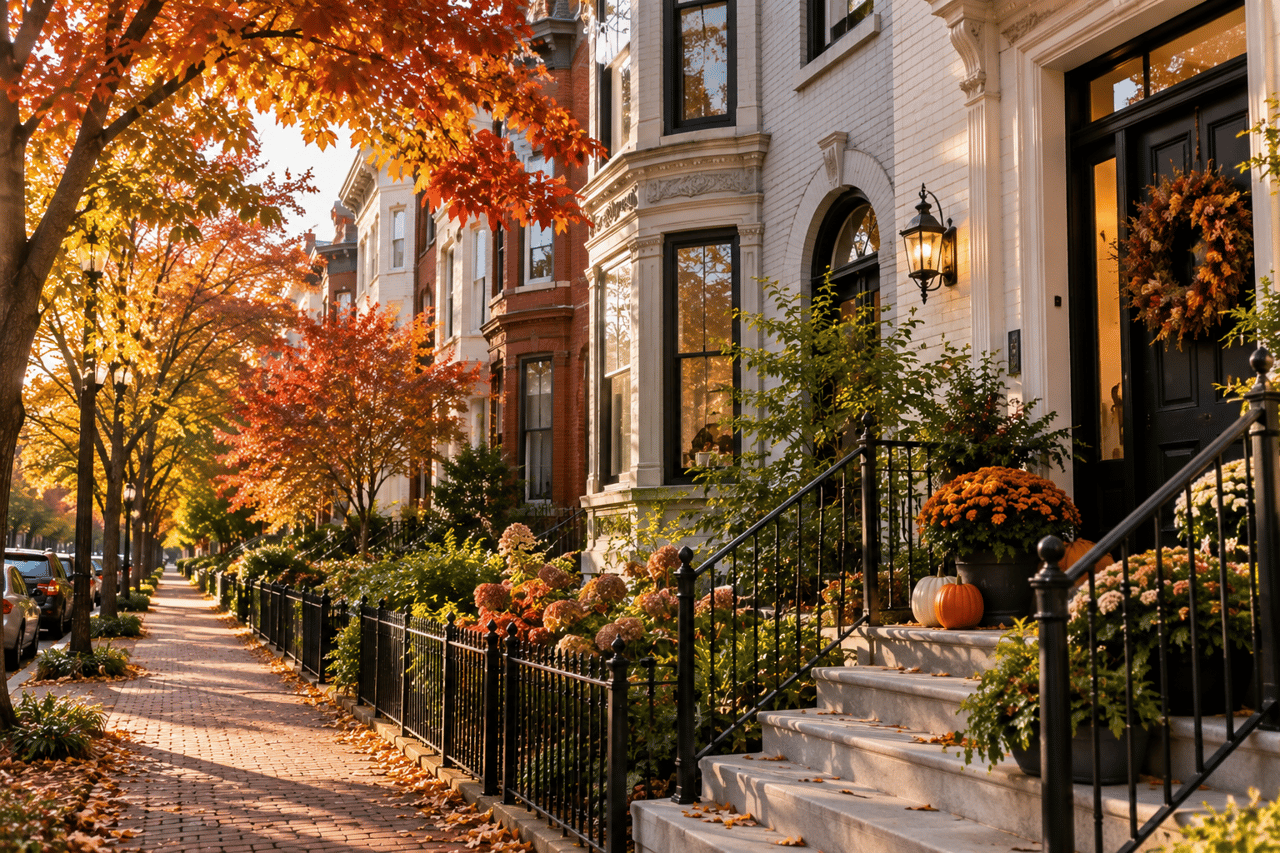
If the picture in your head when you imagine living in Washington includes a historic rowhome, brick sidewalk, leafy residential street, and neighborhood park, Capitol Hill deserves a serious look.
The neighborhood is obviously associated with the U.S. Capitol, Supreme Court, and Library of Congress, but Capitol Hill as a residential neighborhood extends well beyond the government buildings.
Eastern Market becomes part of the weekend routine for many residents. Barracks Row provides restaurants and neighborhood businesses. Lincoln Park and Stanton Park create green spaces within the neighborhood, and Metro stations including Eastern Market and Capitol South provide access to the Blue, Orange, and Silver lines.
What we particularly like about Capitol Hill is how quickly the experience changes as you walk through it. One block may feel connected to the activity around Eastern Market, while another is a quiet residential street lined with historic homes.
What Is Capitol Hill Real Estate Like?
The historic rowhome is the star of Capitol Hill real estate, although buyers will also find condos and other property types.
With rowhomes, seemingly small details can make meaningful differences in value and everyday life. Width, natural light, renovation quality, outdoor space, parking, basement configuration, and the exact block all matter.
Buyers should also understand the realities of maintaining an older home. Historic charm can come with older systems, masonry maintenance, roof considerations, and renovation rules depending on the property.
For buyers who love that character, however, those tradeoffs can be completely worthwhile.
Capitol Hill is worth exploring if you want: historic rowhomes, neighborhood parks, Eastern Market, Metro access, walkability, and a residential neighborhood with a distinctly Washington identity.
For Privacy, Trees, and a More Residential Feel: Forest Hills
Drive north along Connecticut Avenue and Washington begins to feel different.
Forest Hills offers one of the more residential experiences within Northwest DC, with mature trees, larger lots, detached homes, and proximity to Rock Creek Park and Soapstone Valley.
This is a neighborhood we often think makes sense for buyers who want to remain in Washington but don't necessarily want the density of Dupont Circle or the rowhome lifestyle of Capitol Hill.
There is more breathing room here.
That doesn't mean you're disconnected from the city. The Van Ness-UDC Metro station on the Red Line serves the area, and Connecticut Avenue connects Forest Hills with Cleveland Park, Dupont Circle, and other parts of Northwest Washington.
But when you turn onto many of the residential streets, the pace changes.
What Is Forest Hills Real Estate Like?
Forest Hills DC real estate includes detached homes, larger properties, condos, and apartment buildings, with the residential streets particularly known for substantial homes surrounded by mature landscaping.
Buyers coming from denser parts of DC may be surprised by the amount of space available while still remaining inside the District.
The tradeoff is that the experience is less intensely walkable than Dupont Circle or Georgetown depending on where in the neighborhood you live. For buyers who prioritize privacy, greenery, and square footage, that may be exactly the point.
Forest Hills is worth exploring if you want: larger homes, mature trees, privacy, Rock Creek Park access, a residential atmosphere, and the ability to remain within Washington, DC.
For More Space With Easy Access to DC: Bethesda
Sometimes the best Washington-area neighborhood for your lifestyle isn't technically in Washington at all.
Just across the District line in Montgomery County, Maryland, Bethesda is closely connected to DC while offering a different mix of housing, amenities, and residential environments.
Downtown Bethesda and Bethesda Row provide restaurants, shops, fitness studios, cafés, and newer residential development. The Bethesda Metro station connects the area to Washington on the Red Line, while the Capital Crescent Trail provides a popular route for walking and biking toward the District.
Move away from Downtown Bethesda and the housing becomes more residential, with townhomes and detached homes joining the mix.
That variety is a major reason Bethesda enters the conversation for DC-area buyers who want additional space without completely giving up urban convenience.
What Is Bethesda Real Estate Like?
Bethesda real estate ranges from downtown condos and luxury residences to townhomes and detached houses in surrounding residential neighborhoods.
For someone relocating to the DC area, it is important to remember that Bethesda is in Maryland rather than the District. Contracts, taxes, disclosures, local regulations, and other aspects of purchasing a home differ.
Lifestyle-wise, the more important question is whether Bethesda gives you the combination you're looking for.
If you want restaurants and Metro nearby but also want the option of a larger detached home, Bethesda can create possibilities that are harder to replicate in DC's denser central neighborhoods.
Bethesda is worth exploring if you want: more housing variety, downtown amenities, the Red Line, Capital Crescent Trail access, larger-home options, and easy access to Washington.
So, Which DC Neighborhood Fits Your Lifestyle?
If we were narrowing these neighborhoods down purely by lifestyle, we'd start here:
Dupont Circle: Best for walkability, restaurants, nightlife, Metro access, and city energy.
Cleveland Park: Best for combining green space, neighborhood character, and Red Line convenience.
Georgetown: Best for historic architecture, waterfront access, shopping, dining, and walkability.
Capitol Hill: Best for classic DC rowhomes, neighborhood parks, Eastern Market, and a strong residential community.
Forest Hills: Best for larger homes, privacy, mature trees, and a quieter Northwest DC environment.
Bethesda: Best for buyers who want more space and housing variety while staying closely connected to Washington.
But we wouldn't recommend choosing a neighborhood from a list alone.
Spend time there.
Walk from the Metro to the streets where you're considering buying. Find the grocery store you'd actually use. Grab coffee on a Saturday morning. See what the neighborhood feels like after work. Drive your potential commute. Walk to the nearest park.
Most importantly, pay attention to which tradeoffs bother you and which ones don't.
You might discover that you'd happily sacrifice a guest bedroom to walk everywhere in Dupont Circle. Or that a larger Forest Hills home and access to Rock Creek Park matter far more than being surrounded by restaurants. Maybe the historic rowhome you've always imagined is waiting in Capitol Hill, or perhaps Bethesda gives you the balance of space and convenience you couldn't quite find inside the District.
Those realizations are much more useful than somebody simply telling you which neighborhood is "best."
Finding the Right Neighborhood Is Part of Finding the Right Home
A house or condo can be renovated. Your location can't.
That's why we spend so much time helping buyers understand not only the Washington, DC real estate market, but the neighborhoods themselves. The right home should work when you're inside it, but it should also make sense the moment you walk out the front door.
If you're deciding where to live in Washington, DC or the surrounding DC Metro area, connect with Your Partners DC. Our team can help you compare Dupont Circle, Cleveland Park, Georgetown, Capitol Hill, Forest Hills, Bethesda, and other communities based on your priorities, then help you navigate the local real estate market when you're ready to find your place.