8,568 people live in Forest Hills, where the median age is 41 and the average individual income is $92,592. Data provided by the U.S. Census Bureau.
Total Population
Median Age
Population Density Population Density This is the number of people per square mile in a neighborhood.
Average individual Income
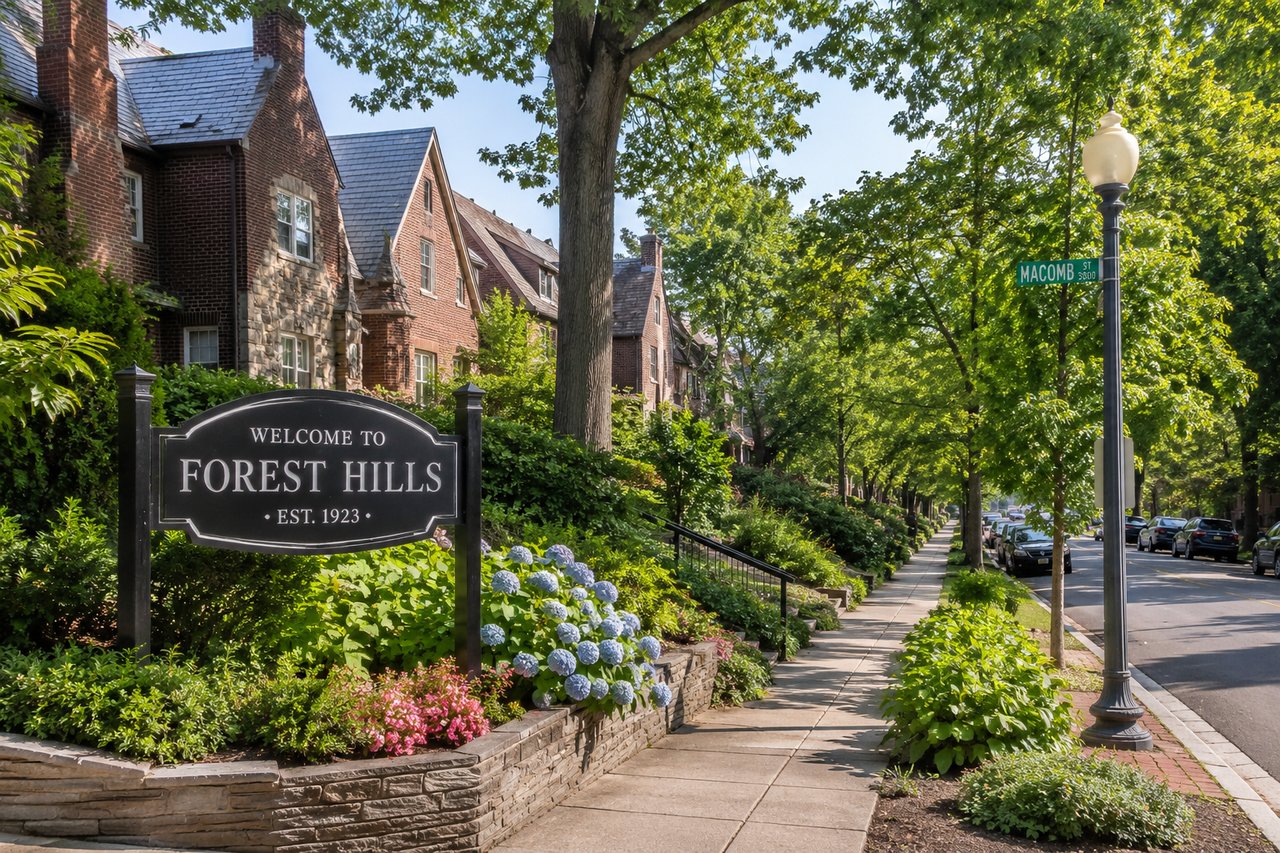
Forest Hills offers a quieter, more residential side of Northwest Washington, DC, while keeping residents connected to the conveniences of city living. Set between Connecticut Avenue and Rock Creek Park, the neighborhood is known for tree-lined streets, substantial single-family homes, established landscaping, and a setting that can feel surprisingly removed from the pace of downtown DC. Its proximity to Rock Creek Park and Soapstone Valley is a major part of the neighborhood’s character, giving residents convenient access to trails and green space without leaving the city.
Forest Hills real estate stands apart from many denser DC neighborhoods because buyers can find a significant collection of detached homes alongside condominiums and apartments closer to Connecticut Avenue and Van Ness. The residential streets are particularly appealing to buyers looking for more space, mature trees, larger lots, and distinctive architecture while remaining within Washington, DC. For buyers comparing Forest Hills with nearby Cleveland Park, Chevy Chase DC, or other Northwest DC neighborhoods, the combination of residential character and access to Rock Creek Park can make Forest Hills an especially compelling option.
Location within the neighborhood matters when evaluating a Forest Hills home. Properties tucked farther into the residential streets can offer a different experience from homes and condos closer to Connecticut Avenue, where access to Metro, restaurants, groceries, and everyday services becomes more convenient. Understanding those differences, along with property condition, architecture, lot size, recent comparable sales, and current buyer demand, is important when buying or selling a home in Forest Hills.
One of the advantages of living in Forest Hills is having access to both residential surroundings and the Connecticut Avenue corridor. The nearby Van Ness-UDC Metro station provides Red Line service, while Connecticut Avenue connects the neighborhood with Cleveland Park, Woodley Park, Dupont Circle, and Downtown Washington. The Van Ness area also provides restaurants, retail, groceries, and other everyday conveniences near the Metro.
For residents who value time outdoors, Forest Hills has another major advantage: its relationship with Rock Creek Park. Soapstone Valley connects into the broader Rock Creek Park trail network, creating opportunities for walking, running, and hiking remarkably close to home. It is one of the features that helps Forest Hills balance the benefits of Northwest DC living with a noticeably greener residential environment.
Whether you are considering buying a home in Forest Hills or preparing to sell, local context matters. Home values can vary based on property type, location within the neighborhood, lot and outdoor space, renovations, architectural character, and proximity to amenities. A detached Forest Hills home on a quiet residential street should not be evaluated the same way as a condominium closer to Connecticut Avenue, even when the properties are geographically close.
Your Partners DC helps buyers and sellers understand the nuances of Forest Hills and the broader Northwest DC real estate market. From evaluating homes and neighborhood fit to pricing, marketing, negotiations, and closing, our team provides local guidance throughout the process.
Ready to explore Forest Hills real estate or find out what your Forest Hills home could be worth? Connect with Your Partners DC to start a conversation about buying or selling in Forest Hills and the surrounding Washington, DC neighborhoods.
There's plenty to do around Forest Hills, including shopping, dining, nightlife, parks, and more. Data provided by Walk Score and Yelp.
Explore popular things to do in the area, including Van Ness Wines And Liquors, Van Ness Check Cashing, and Taylor Robin M.
| Name | Category | Distance | Reviews |
Ratings by
Yelp
|
|---|---|---|---|---|
| Dining · $$ | 0.31 miles | 32 reviews | 3.9/5 stars | |
| Dining | 0.31 miles | 0 reviews | 0/5 stars | |
| Shopping | 0.21 miles | 0 reviews | 0/5 stars | |
| Active | 0.3 miles | 0 reviews | 0/5 stars | |
|
|
||||
|
|
||||
|
|
||||
|
|
||||
|
|
||||
|
|
Forest Hills has 5,072 households, with an average household size of 2. Data provided by the U.S. Census Bureau. Here’s what the people living in Forest Hills do for work — and how long it takes them to get there. Data provided by the U.S. Census Bureau. 8,568 people call Forest Hills home. The population density is 30,466 and the largest age group is Data provided by the U.S. Census Bureau.
Total Population
Population Density Population Density This is the number of people per square mile in a neighborhood.
Median Age
Men vs Women
Population by Age Group
0-9 Years
10-17 Years
18-24 Years
25-64 Years
65-74 Years
75+ Years
Education Level
Total Households
Average Household Size
Average individual Income
Households with Children
With Children:
Without Children:
Marital Status
Blue vs White Collar Workers
Blue Collar:
White Collar: